

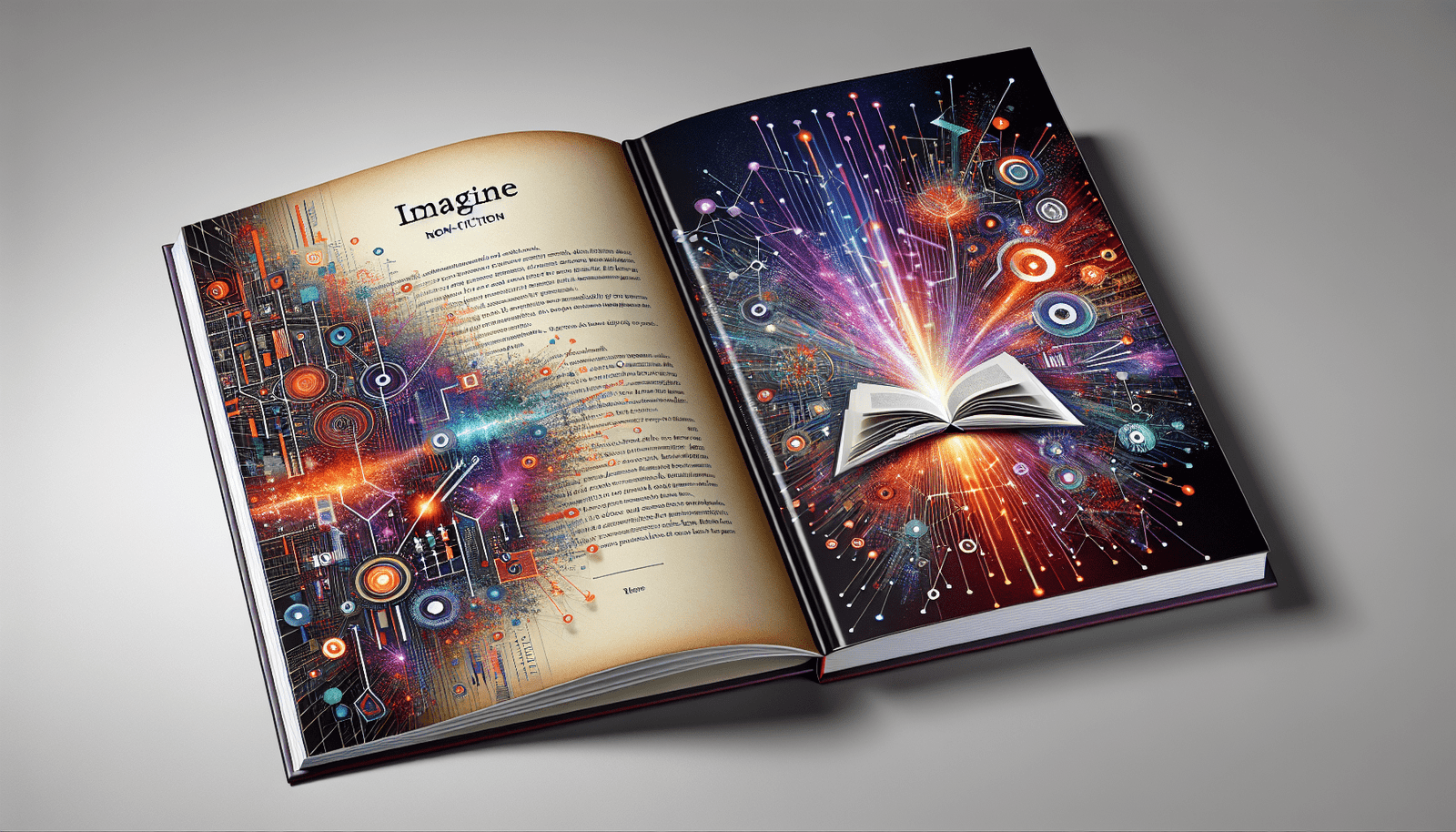
Have you ever wondered how to make your non-fiction book cover stand out in a sea of other titles? Leveraging data visualization could be your secret weapon. In “How Can Data Visualization Transform Your Non-Fiction Book Cover into a Compelling Masterpiece?”, you’ll discover how infographics, charts, and other visual data tools can transform your cover from mundane to mesmerizing. This approach not only captures attention but also conveys complex information at a glance, making your book irresistible to curious readers. Dive into this article to explore the power of data visuals and revolutionize your cover design!
Have you ever wondered what makes a non-fiction book cover stand out and grab your attention at first glance? It’s not just about the title or the author’s name, but the visual elements that can make or break a book’s first impression. This is where data visualization steps in as a game-changer. Let’s dive into how data visualization can transform your non-fiction book cover into a compelling masterpiece.

Understanding Data Visualization
Data visualization is the graphical representation of information and data. By using visual elements like charts, graphs, and maps, data visualization tools provide an accessible way to see and understand trends, outliers, and patterns in data. But how does this translate to a book cover? It marries the objectivity of data with the creativity of design, making your book not just visually appealing but also intellectually stimulating.
Why Use Data Visualization for Book Covers?
Data visualization can make complex information digestible at a glance. For non-fiction books, which often involve intricate topics, presenting a snapshot of the content through data can immediately inform and attract potential readers. It sets your book apart in a crowded market by offering a blend of aesthetic appeal and informative content right on the cover.
Types of Data Visualization
There are numerous types of data visualization that you can incorporate into your book cover design.
| Type | Description | Example |
|---|---|---|
| Bar Charts | Ideal for comparing different sets of data | Crime rates across different countries |
| Pie Charts | Useful for showing composition of categories within a whole | Market share of various companies |
| Line Graphs | Best for showing trends over time | Climate change trends |
| Heat Maps | Good for representing data density | Population density by region |
| Scatter Plots | Effective for showing correlations | Education level vs. income distribution |
Applying Data Visualization to Your Book Cover Design
Now that you know what data visualization is and why it’s useful, let’s explore how to apply it to your book cover.
Choosing the Right Data
The first step is to select data that is relevant and aligns with the theme of your book. Whether your non-fiction book is about economics, history, science, or lifestyle, the data you choose must resonate with the core message.
Designing Interactive Elements
Interactive elements can take your book cover to the next level, especially in digital formats. These can include QR codes that lead to an interactive chart or a section of your website that delves deeper into your data.
Color Schemes and Font Choices
Data visualization heavily relies on the use of effective color schemes and fonts. Ensure that the colors you choose enhance readability and don’t overwhelm the viewer. Similarly, fonts should be clear and professional yet engaging.
Tools for Creating Data Visualizations
Several tools can help you create compelling data visualizations without needing a PhD in data science.
| Tool | Description | Features |
|---|---|---|
| Tableau | User-friendly yet powerful | Drag-and-drop interface, real-time data updates |
| Google Data Studio | Free and easy to use | Integration with Google services |
| Canva | Ideal for beginners | Templates, user-friendly interface |
| Adobe Illustrator | High customization ability | Professional design features |
Choose a tool that fits your skill level and needs. Many of these tools offer tutorials to help you get started.
Real-Life Examples of Data Visualization on Book Covers
“Dear Data” by Giorgia Lupi and Stefanie Posavec
“Dear Data” is a book that beautifully displays a year-long correspondence between two information designers through postcards filled with hand-drawn data visualizations. The cover itself is a collage of these drawings, making it both a visual delight and an informative introduction to what’s inside.
“Information is Beautiful” by David McCandless
David McCandless’s book is a testament to the power of data visualization. Each page—and notably, the cover—presents complex information in visually appealing and easily digestible formats. Pie charts and infographics make the cover both an artwork and a snapshot of the book’s content.
Case Study: Re-imagining a Classic
Let’s consider a classic non-fiction book, “Freakonomics” by Steven D. Levitt and Stephen J. Dubner. Imagine if instead of a plain apple with an orange inside, the cover had featured an elegant infographic displaying the various unconventional economic theories discussed within. Such a design could immediately compel new readers to pick up the book.
Practical Tips for DIY Designers
Research and Plan
Before you start, research your topic thoroughly and plan your data visualization elements. Sketch out ideas and take note of what you want to communicate visually.
Simplify
Simplicity is key. A cluttered cover can be off-putting. Aim for a design that conveys your message succinctly. Use whitespace to your advantage to avoid overwhelming your audience.
Test and Iterate
Create multiple drafts and seek feedback. Platforms like social media can be great for gathering input from your community. Iterate on your design based on the feedback you receive to ensure it resonates well with your target audience.
The Psychology of Data Visualization
Cognitive Load
Understanding how people process information can be hugely beneficial. Data visualizations reduce cognitive load by presenting information graphically rather than textually. This allows for quicker comprehension and retention.
Emotional Connection
Visual elements can also evoke emotions. By selecting the right color schemes and typographical elements, you can create a mood that aligns with your book’s theme and attracts readers on an emotional level.
Future Trends in Data Visualization for Book Covers
Augmented Reality (AR)
Imagine a book cover coming to life when viewed through an AR app! This could include interactive graphs, 3D representations, and more, providing a more immersive experience for the reader.
Personalized Data Visualizations
With advancements in AI and machine learning, personalized data visualizations based on reader preferences could be the future of book covers. This could include adapting colors, themes, and even data points to cater to individual reader profiles.
Conclusion
Data visualization is a powerful tool that can elevate your non-fiction book cover from mundane to masterpiece. By understanding how to harness this tool, you can create covers that are not only visually appealing but also informative, thereby setting your book apart in a crowded market. So, why settle for the ordinary when you can create something extraordinary? Start experimenting with data visualization today, and watch as your book cover transforms into a compelling masterpiece that captivates readers at first glance.
Ready to transform your non-fiction book cover? Dive into the world of data visualization and discover the endless possibilities that await.